


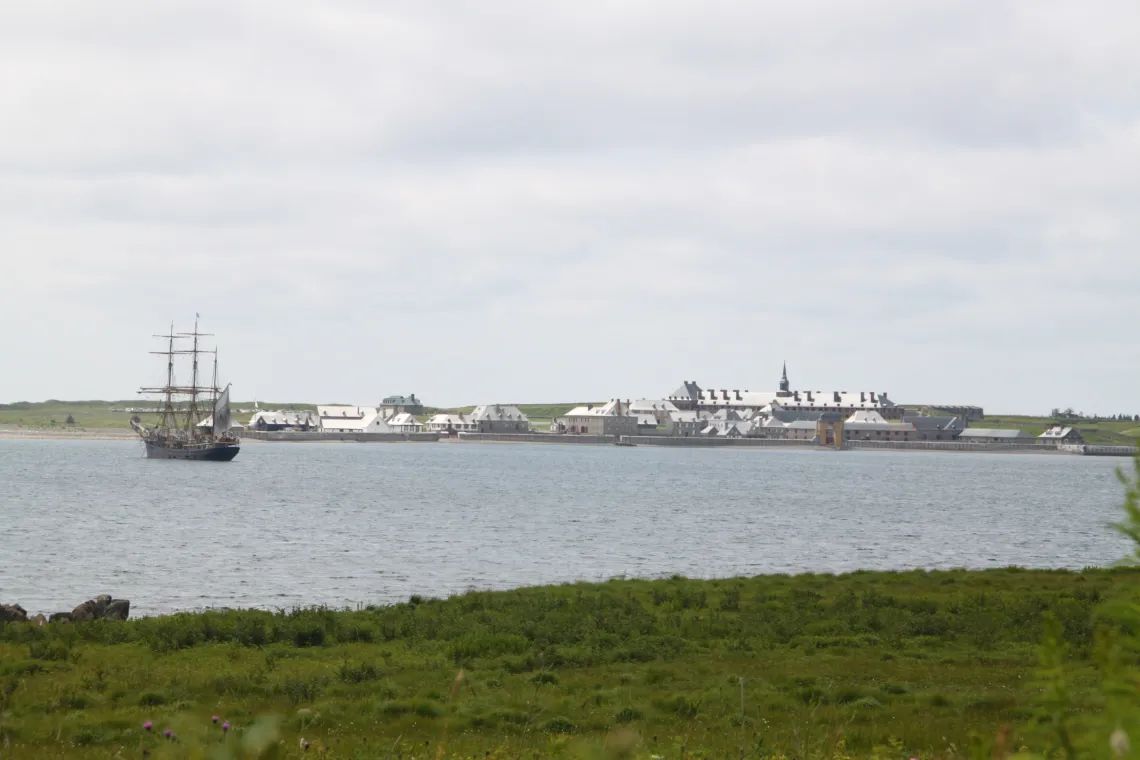
Fortress of Louisbourg National Historic Site in Nova Scotia, Canada—a major 18th century cod fishing port. Photo by Martin Welker.”
Applied zooarchaeology is the utilization of zooarchaeological and paleontological datasets—specifically the remains of animals recovered from archaeological and/or historical contexts– to address contemporary issues in conservation biology, wildlife management, and ecological restoration.
Rather than stopping at traditional archaeological goals like reconstructing past human diets or ancient cultural behaviors, applied zooarchaeology leverages the deep-time perspective of the faunal record to address modern environmental problems. Key applications include:
- Establishing Ecological Baselines: Determining the natural pre-industrial distributions, abundances, and historical ranges of native species to provide realistic targets for conservation.
- Tracking Long-Term Human Impacts: Differentiating between natural environmental fluctuations and ecosystem shifts directly caused by human activity over centuries or millennia.
- Informing Wildlife Management and Reintroductions: Identifying which species or genetic ecotypes are genuinely native to a region versus those introduced by human agency, thereby guiding modern species reintroduction and eradication policies.
I am involved in efforts to contextualize and study 16th-20th Century overfishing in the North Atlantic (especially Atlantic cod in partnership with the ERC funded 4-Oceans project), and evaluate how the distribution of bighorn sheep in the Southwest was impacted by the introduction of domestic sheep and goats. I am also a faculty affiliate in the Lovejoy Center for Bridging Biodiversity, Conservation Science & Policy at the University of Arizona.
Back to Zooarchaeology page